

CPA Michael Doorley to Examine Financial Basis for Promised $5,000 Trump Dividend

Promised Trump Dividend

Financial Civics
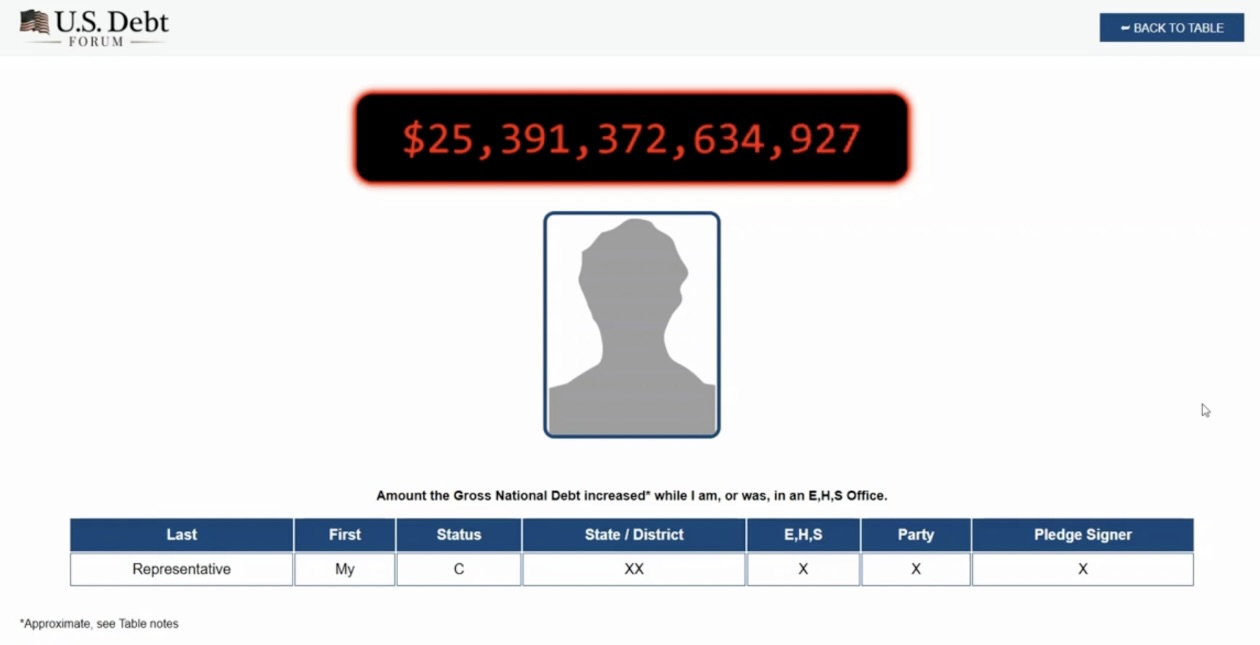
Congressional Debt Clock - see how much the national debt increased while your representative has been in office
American Financial Civics program will examine whether approximately $1.2 trillion is available to fund promised $5,000 dividend
The recorded program, hosted by Doorley and presented by U.S. Debt Forum, will examine the promised dividend against the federal government’s audited financial statements, current year-to-date financial results, and the Congressional Budget Office’s and administration’s 10-year forecasts.
The central financial questions are whether the U.S. is financially successful enough to justify the promised dividend and, if so, where approximately $1.2 trillion would come from, when it would be available, and whether it is already committed or relied upon for other federal purposes.
THE PROMISED TRUMP DIVIDEND
On September 9, at the Republican National Midterm Convention in Dallas, Trump promised a $5,000 dividend to every adult citizen in the United States if Republicans win both the House and Senate. He stated the dividend is possible “because we have done so well, and because our country is making so much money…” and described it as being “very much like a successful company” making a cash distribution to its shareholders. He called it the “Trump Dividend.”
A $5,000 payment to approximately 240 million adults would produce an estimated cost of approximately $1.2 trillion. The actual cost would depend on the eligibility rules and structure ultimately established for the program.
With early voting already underway in some states, the promise raises financial questions that need to be answered now for voters to make an informed decision.
THE FINANCIAL QUESTION
Doorley says the question is not simply whether the federal government is collecting substantial amounts of money. A dividend is generally understood as a distribution from earnings or accumulated profits, rather than simply from cash receipts before outlays.
“The financial question is straightforward: Is approximately $1.2 trillion actually available for this purpose — not already committed, not already relied upon for other federal purposes, and available when the payments would have to be made?”
“Federal revenues are only one part of the picture. The government also has existing costs, obligations, liabilities and financing requirements. The financial records provide the information needed to examine the entire picture.”
The October 6 program will examine the government’s financial position and condition, current budget results and future fiscal projections in relation to the promised dividend.
“SHOW US THE MONEY”
Doorley says, “the financial records should provide the starting point for answering the question." He continues, "Show Us the Money. Show us the most recent audited Financial Report of the United States Government, the latest Monthly Treasury Statement, the administration’s and the Congressional Budget Office’s current deficit projections for the next 10 years. Show us where approximately $1.2 trillion would come from and when it would actually be available.”
Potential sources of funding include existing federal revenues, future tariff revenues, new revenues, investment income, spending reductions, proceeds from the sale of federal assets, heritage or stewardship assets, borrowing that would increase the national debt, or some combination of these or other sources.
The issue is whether a documented funding source or combination of sources exists that can provide approximately $1.2 trillion without relying on money already committed or projected for other purposes, and whether Congress will approve it.
WHAT THE GOVERNMENT’S FINANCIAL RECORDS SHOW
The government’s latest audited financial statements:
The FY2025 Financial Report of the U.S. Government, the most recent available, provides an audited, accrual-based view of the federal government’s financial position and condition.
Treasury reported:
• $2.1 trillion – Net Operating Cost — the government’s accrual-based “bottom line”
• $6.1 trillion – Total Assets
• $47.8 trillion – Total Liabilities
• -$41.7 trillion – Total Net Position
Heritage and stewardship assets also form part of the government’s broader financial reporting framework but are not included above.
The actual federal budget fiscal results year-to-date through August 2026:
The Monthly Treasury Statement – August 2026:
• $4.8 trillion – Total Receipts
• $6.8 trillion – Total Outlays
• $2.0 trillion – Budget Deficit
Looking Before FY2026
Since 2002, the federal government has incurred an annual budget deficit and net operating cost in every fiscal year through FY2025:
• $24 trillion – Cumulative Annual Deficits
• $36 trillion – Cumulative Annual Net Operating Costs
Looking Forward from FY2026
• $15.7 trillion – administration’s 10-year cumulative annual budget deficit projection, FY2026–FY2035
• $24.4 trillion – CBO’s February 2026 baseline 10-year cumulative annual budget deficit projection, FY2027–FY2036
Both show an annual budget deficit in every fiscal year.
THE FINANCIAL CIVICS APPROACH
The American Financial Civics series is intended to make government financial information more understandable to the public. It is not to tell Americans what conclusion to reach.
PROGRAM AND MEDIA RESOURCES
The program will be available free of charge at MichaelDoorley.com.
Supporting materials include Numbers at a Glance and Media Fact Sheet:
• Numbers at a Glance — key figures
• Media Fact Sheet — source documents, financial data and background information
ABOUT MICHAEL DOORLEY, CPA
Michael Doorley, CPA, is an advocate for Financial Civics and the founder of U.S. Debt Forum. A former auditor and Fortune 500 financial-services executive, Doorley has more than 35 years of experience, including senior financial, operational and administrative leadership positions and board experience.
Doorley writes educational articles for state CPA society publications and other audiences and speaks on the financial condition and financial reporting of the U.S. government.
His work focuses on helping Americans understand the Financial Report of the United States Government, including the distinction between the primarily cash-based federal budget deficit and the accrual-based Net Operating Cost reported in the government’s audited financial statements.
Doorley also recently launched the first nonpartisan Congressional Debt Clocks, which provide a historical perspective on the growth of the U.S. national debt during the tenure of every President, Vice President, and every member of the House and Senate beginning with the 115th Congress.
Michael Doorley
U.S. Debt Forum
+1 914-816-3100
email us here
Legal Disclaimer:
EIN Presswire provides this news content "as is" without warranty of any kind. We do not accept any responsibility or liability for the accuracy, content, images, videos, licenses, completeness, legality, or reliability of the information contained in this article. If you have any complaints or copyright issues related to this article, kindly contact the author above.
